Tear-Off Versus Overlay, and What Happens to Your Decking
An overlay covers a problem instead of solving it, and the decking underneath is where that difference shows up years later.
September 4, 2026 · 3 min read
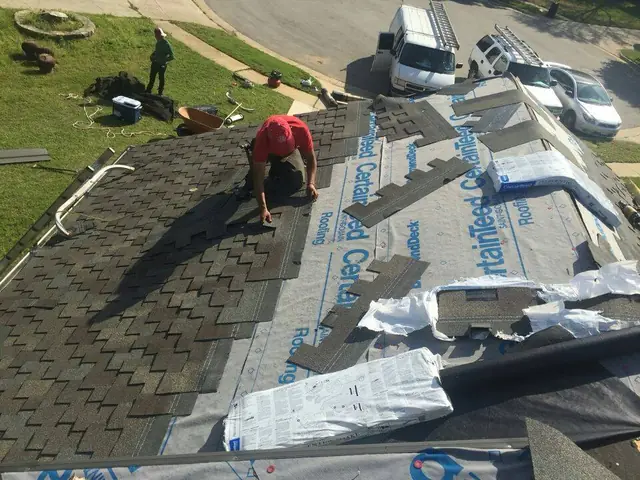
When a roof estimate comes in lower than expected, it's often because it's quoting an overlay instead of a tear-off, and the two are not the same job wearing different price tags. An overlay is a real option in some narrow situations. On a storm-damaged roof, it's usually the wrong one, and the reason has nothing to do with how the new shingles look on day one.
What an overlay actually is
An overlay means installing a new layer of shingles directly over the existing layer, without removing what's already there. It's faster and generates less debris, which is why it's cheaper to quote. What it doesn't do is let anyone look at the roof deck, the wood layer underneath the shingles that everything else is fastened to. If that deck has a problem, an overlay buries it under a brand new roof rather than fixing it.
Why a second layer is usually a false economy
A second layer of shingles adds real weight to a roof structure that was designed around a single layer, and it changes how the new shingles sit and seal, since they're now nailing into an uneven surface instead of a flat deck. On a roof that just took hail or wind damage, that's the wrong moment to skip an inspection of what's underneath. The storm didn't stop at the shingles. It's exactly the layer an overlay can't examine that most needs examining after a real weather event.
Soft decking: the problem an overlay hides
Soft decking means the plywood or OSB sheathing under the shingles has weakened, usually from long-term moisture that got in through a failed seal or a slow leak nobody noticed. Walk on a soft section and it gives slightly underfoot, the same spongy feeling as a bruised shingle but underneath instead of on top. Shingling directly over soft decking doesn't stop the rot, it just puts a new roof over a deck that's still failing, and the eventual repair costs more because now there are two layers to remove instead of one, plus the deck itself, plus whatever the ongoing moisture damaged in the meantime.
Dry-in: why the same day matters
On a tear-off, once the deck is exposed, it needs to be covered again before the day ends, whatever the weather forecast says. Synthetic underlayment goes down the same day the old shingles come off, closing the roof back up before an unexpected storm can turn an open deck into a bigger problem than the one you started with. Decking that tests soft during that exposure gets replaced right there, board by board, rather than shingled over and left as someone else's problem down the line.
- Tear-off removes the old layer completely and exposes the deck for inspection
- Soft or rotted decking gets replaced during tear-off, board by board, before anything new goes down
- Synthetic underlayment goes down the same day the deck is exposed, so nothing sits open overnight
- An overlay skips all of the above and shingles directly over whatever is already there, good or bad
What a warranty actually depends on
Manufacturer warranties, the twenty-year to lifetime coverage that comes with a new roof, are written against a proper installation on a sound deck. Shingle manufacturers know an overlay changes how their product performs, which is why overlay installations often carry reduced warranty terms or none at all, separate from whatever workmanship warranty the contractor offers on top of it. All of our full roof jobs come with a full written warranty, and that warranty means more when it's backed by a deck someone actually inspected rather than one nobody has looked at in twenty years.
It's worth asking directly, on any estimate you get, whether it's quoting a tear-off or an overlay, because the line item alone doesn't always say so plainly. If the number seems low compared to other bids, that's usually the first place to look. A tear-off costs more up front because it does more: it removes what's there, inspects what's underneath, and replaces what needs replacing before the new roof ever goes on. On a roof with real storm damage, that inspection isn't an add-on, it's the whole point of the job.
If your estimate mentions an overlay, ask why, and ask what's underneath. Call 817-823-7224 for an inspection that actually opens the roof up.
MAG Builders, 817-823-7224
Call 817-823-7224More articles
What Hail Actually Does to an Asphalt Roof (and Why You Can't See It From the Driveway)
A roof can take a real hit and still look untouched from the street. The damage that matters is underneath the surface, not on it.
The Insurance Claim Clock: What To Do in the First Week After a North Texas Storm
The week right after a storm is when most claims are won or lost, usually before the homeowner has even called anyone.